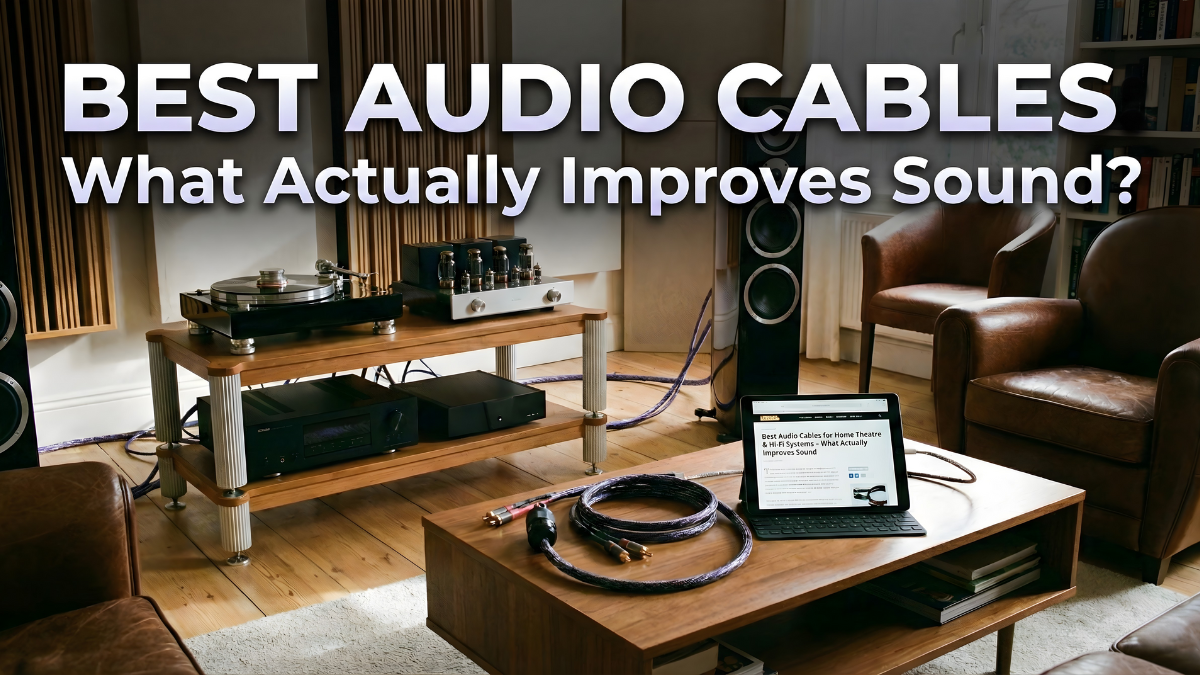
When upgrading a home theatre or Hi-Fi system, many people focus on speakers and amplifiers while overlooking one of the most important components: audio cables. In Australian homes, poor cable choice is a common reason for weak bass, background noise or inconsistent sound quality, even when premium equipment is used.
This guide explains the best audio cables for home theatre and Hi-Fi systems, breaks down what actually affects sound quality, and works as a practical speaker cable guide for buyers who want reliable performance rather than marketing hype.
Why Audio Cables Matter in Home Theatre and Hi-Fi Setups
Audio cables carry low-level signals that are sensitive to interference, resistance and poor connections. Using the wrong cable can introduce noise, reduce clarity or limit the performance of even the best speakers and amplifiers.
Professional installers understand that correct cable type, thickness and construction are essential for clean, balanced sound across all channels.
Speaker Cables: The Foundation of Good Sound
Speaker cable choice directly affects power delivery from the amplifier to the speakers. In home theatre systems, incorrect cable gauge is one of the most common causes of flat or distorted sound.
Thicker speaker cables reduce resistance, especially over longer distances. For most Australian living rooms, mid-gauge speaker cable provides the best balance between flexibility and performance. Longer cable runs require heavier gauge to maintain sound quality.
RCA Audio Cables for Home Theatre Systems
RCA cables are widely used for subwoofers, amplifiers and legacy audio connections. Poorly shielded RCA cables often introduce humming or buzzing, particularly in setups where power and signal cables run close together.
High-quality RCA audio cables with proper shielding are essential for clean low-frequency performance, especially when connecting active subwoofers.
Optical Audio Cables (Toslink)
Optical audio cables transmit sound using light rather than electrical signals, making them immune to electrical interference. They are commonly used between TVs, soundbars and AV receivers.
While optical cables do not support the latest surround formats, they are extremely reliable for basic surround sound and stereo audio where electrical noise is a concern.
XLR Audio Cables for Hi-Fi and Professional Systems
XLR cables are designed for balanced audio transmission and are commonly found in high-end Hi-Fi and professional AV systems. They provide superior noise rejection and stable signal transmission over longer distances.
For users with compatible equipment, XLR cables offer one of the cleanest audio connections available.
Comparing Common Audio Cable Types
| Cable Type | Best Used For | Key Benefit | Limitation |
|---|---|---|---|
| Speaker cable | Speakers to amplifier | Low resistance, high power | Gauge selection matters |
| RCA cable | Subwoofers, amps | Simple, widely compatible | Susceptible to interference |
| Optical cable | TV to soundbar | Immune to electrical noise | Limited audio formats |
| XLR cable | Hi-Fi, pro audio | Balanced, noise-free | Requires compatible gear |
Understanding these differences helps match the right cable to the right application.
Common Audio Cable Mistakes to Avoid
Using thin speaker cable over long distances reduces sound quality. Running audio cables alongside power cables introduces noise. Buying unshielded RCA cables causes hum. Assuming all audio cables sound the same leads to inconsistent performance.
Installers avoid these mistakes by selecting cables based on distance, environment and equipment capability.
How to Choose the Right Audio Cable for Your Setup
Choose speaker cable gauge based on distance and power requirements. Use shielded RCA cables for subwoofers and line-level connections. Select optical cables when electrical interference is likely. Use XLR cables for balanced Hi-Fi or professional systems where available.
For Australian homes, durability and proper insulation are also important due to temperature variation and longer cable runs.
Buying Audio Cables in Australia with Confidence
Quality audio cables designed for real-world installations perform more consistently over time. Choosing cables from a dedicated audio cables Australia supplier ensures correct specifications, reliable materials and compatibility with modern home theatre systems.
Well-chosen cables also simplify future upgrades and troubleshooting.
Final Thoughts
Audio cables do not need to be expensive to be effective, but they must be appropriate for the system and environment. Correct speaker cable gauge, proper shielding and thoughtful routing all contribute to cleaner sound and better system performance.
Using this speaker cable guide helps ensure your home theatre or Hi-Fi system delivers the clarity, balance and impact it was designed for.
Frequently Asked Questions
Do audio cables really affect sound quality?
Yes. Cable thickness, shielding and connection quality all affect signal integrity and overall sound performance.
What speaker cable gauge should I use for home theatre?
For most setups, mid-gauge speaker cable works well. Longer distances require thicker cable to reduce signal loss.
Are optical audio cables better than HDMI for sound?
Optical cables are reliable and noise-free but do not support advanced audio formats like HDMI eARC.
Are expensive audio cables worth it?
Price alone does not guarantee better sound. Correct specifications and build quality matter more.
Should audio and power cables be separated?
Yes. Separating power and audio cables reduces interference and improves sound stability.