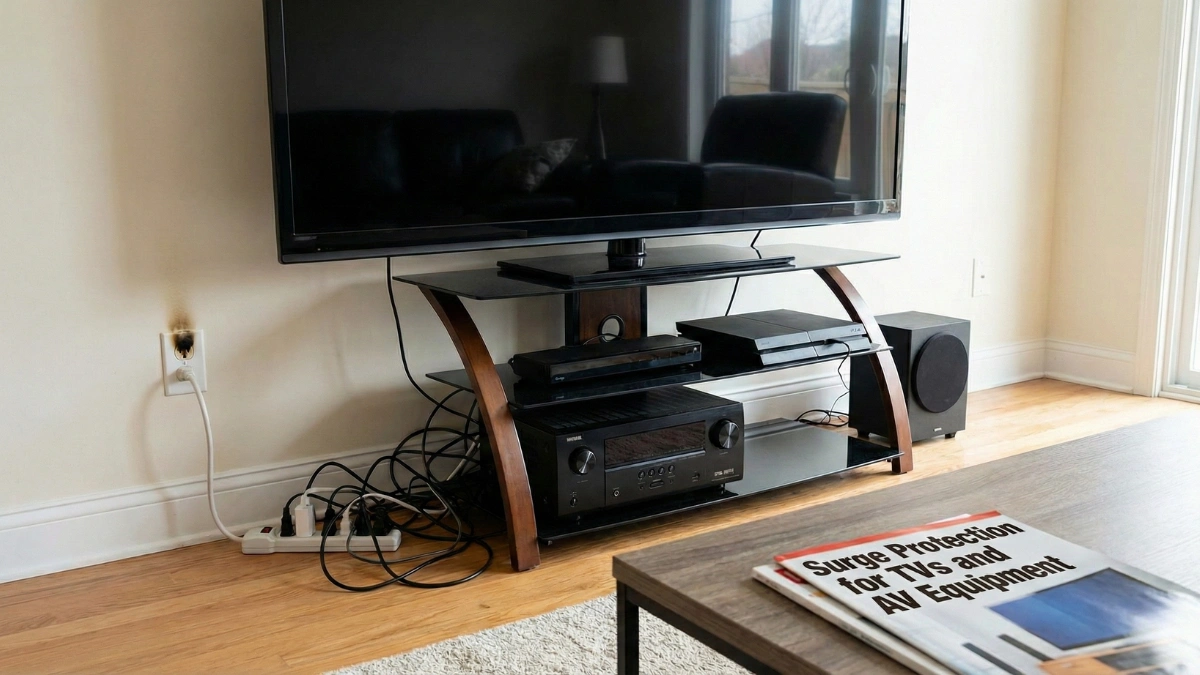
Modern TVs and AV systems are far more sensitive than older electronics, yet surge protection is still one of the most overlooked parts of home entertainment setups. Many Australians assume that power boards or wall sockets provide enough protection, only to discover the damage after a power surge has already occurred.
This guide explains whether you need surge protection for TVs and AV equipment, how HDMI surge protection works, and why proper protection is a critical investment rather than an optional accessory.
Why TVs and AV Equipment Are Vulnerable to Power Surges
Power surges are short spikes in electrical voltage that can occur during storms, grid switching, faulty appliances or even everyday power fluctuations. While some surges are large and obvious, many are small and cumulative, slowly degrading sensitive electronics.
Modern TVs, AV receivers, gaming consoles and streaming devices contain complex circuitry that can be damaged even by minor surges over time.
What Is an AV Surge Protector?
An AV surge protector is designed to absorb or redirect excess voltage before it reaches your equipment. Unlike basic power boards, quality AV surge protectors are engineered specifically for sensitive audio-visual electronics.
They protect not only power lines but often include protection for HDMI, antenna and network connections as well.
HDMI Surge Protection Explained Simply
Many people protect the power connection but ignore HDMI cables. HDMI ports are directly connected to delicate internal circuits and can carry damaging voltage spikes between devices.
HDMI surge protection prevents surges from travelling through HDMI cables between TVs, receivers and source devices. This is especially important in systems where equipment is connected across different power outlets.
Surge Protector vs Power Board
| Feature | Basic Power Board | AV Surge Protector |
|---|---|---|
| Surge absorption | Minimal or none | Designed for voltage spikes |
| Equipment protection | Very limited | High |
| HDMI protection | No | Available on many models |
| Longevity | Short | Long-term protection |
| Suitable for AV systems | No | Yes |
This comparison shows why power boards should not be relied on for protecting expensive AV equipment.
When Surge Protection Is Absolutely Necessary
Surge protection is essential if you live in areas prone to storms, experience frequent power fluctuations or use expensive AV equipment. Homes with wall-mounted TVs, long cable runs or multiple connected devices face higher risk because surges can travel through both power and signal cables.
Installers almost always include surge protection in professional AV installations because replacing damaged equipment costs far more than prevention.
Benefits of Using AV Surge Protectors
AV surge protectors extend the lifespan of your equipment by reducing electrical stress. They protect multiple devices at once and reduce the risk of sudden failure after storms or outages.
Many models also include noise filtering, which can improve audio and video stability by smoothing power delivery.
Common Mistakes People Make
Relying on cheap power boards gives a false sense of security. Ignoring HDMI and antenna surge paths leaves equipment exposed. Plugging AV gear directly into wall sockets increases risk. Assuming surge protection is unnecessary until damage occurs is the most expensive mistake.
Professionals treat surge protection as standard, not optional.
Choosing the Right Surge Protector for AV Equipment
Look for surge protectors designed specifically for audio-visual use. Ensure they support adequate load capacity and include protection for HDMI, antenna and network connections if required.
Quality construction and clear surge rating specifications matter far more than brand name alone.
Surge Protection for Australian Homes
Australian power conditions can vary due to weather events and infrastructure switching. Homes with roof-mounted antennas, outdoor TVs or long HDMI runs face additional risk.
Using dedicated AV surge protectors significantly reduces the chance of damage in these environments.
Is Surge Protection Worth the Cost?
Compared to the price of TVs, AV receivers and gaming consoles, surge protectors are a low-cost investment. They protect thousands of dollars’ worth of equipment and reduce downtime, repairs and replacement costs.
From an installer’s perspective, surge protection is one of the simplest ways to protect a system long-term.
Final Thoughts
If you own a modern TV or AV system, surge protection is not optional. It is a basic requirement for protecting sensitive electronics from unpredictable power conditions.
Using proper AV surge protectors and HDMI surge protection ensures your equipment remains safe, reliable and fully functional for years to come.
Frequently Asked Questions
Do TVs really need surge protection?
Yes. Modern TVs contain sensitive electronics that can be damaged by power surges.
Is a power board enough for AV equipment?
No. Most power boards offer little or no real surge protection.
Can HDMI cables carry power surges?
Yes. Surges can travel through HDMI connections between devices.
Do surge protectors affect picture or sound quality?
No. Quality surge protectors do not degrade performance and may improve stability.
Is surge protection required for wall-mounted TVs?
Yes. Wall-mounted setups often involve long cable runs, increasing surge risk.