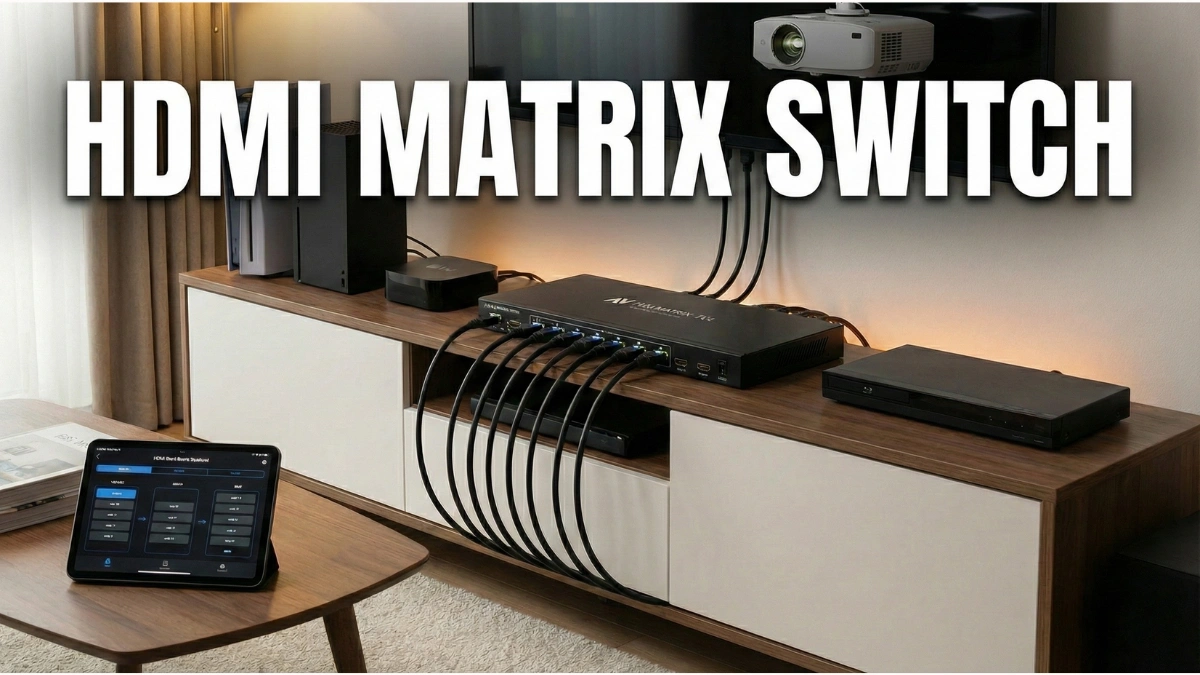
As home theatres and multi-room setups become more common across Australia, many systems hit a limit where simple HDMI splitters or switches no longer work. This is where an HDMI matrix switch becomes the most powerful upgrade for both homes and commercial AV installations.
If you have multiple source devices and more than one display, understanding what an HDMI matrix switch is and when to use one can completely change how your system operates.
What Is an HDMI Matrix Switch?
An HDMI matrix switch allows multiple HDMI sources to be connected and routed independently to multiple displays. Unlike basic HDMI splitters that send the same signal to every screen, a matrix switch lets you choose which source appears on which display at any time.
For example, one TV can show a gaming console while another TV displays live TV or streaming content, all from the same central equipment rack.
How an HDMI Matrix Switch Works
An HDMI matrix switch sits at the centre of your AV system. HDMI source devices connect to the inputs, and TVs, projectors or monitors connect to the outputs. The matrix then digitally routes signals based on user selection via remote, app or control system.
This flexibility is why HDMI matrix switches are widely used in professional AV distribution.
HDMI Matrix Switch vs HDMI Splitter vs HDMI Switch
| Device Type | What It Does | Best Use Case | Limitation |
|---|---|---|---|
| HDMI splitter | One source to many displays | Same content everywhere | No independent control |
| HDMI switch | Many sources to one display | Single TV setups | One display only |
| HDMI matrix switch | Many sources to many displays | Multi-room and advanced systems | Higher upfront cost |
This comparison highlights why matrix switches are chosen for scalable systems.
When Should You Use an HDMI Matrix Switch?
An HDMI matrix switch is ideal when you want different content on different screens without constantly plugging and unplugging cables. It is commonly used in homes with multiple TVs, home theatres combined with outdoor displays, or systems that include both TVs and projectors.
Commercial spaces such as offices, hospitality venues, retail stores and education facilities also rely heavily on HDMI matrix switches for flexible AV distribution.
Benefits of Using an HDMI Matrix Switch
An HDMI matrix switch centralises all AV sources, reducing clutter behind displays. It allows instant switching between sources and displays, improves cable management and enables cleaner wall-mounted installations.
Many modern HDMI matrix switches also support remote control, IR extension, Ethernet control and automation system integration.
Key Features to Look for in an HDMI Matrix Switch
Resolution support is critical, especially for 4K and 8K systems. HDCP compatibility ensures streaming services work correctly. Audio extraction support allows connection to sound systems. Control options such as remote, app or third-party automation add convenience.
Choosing the right model ensures long-term compatibility and reliable performance.
HDMI Matrix Switch for Home Theatre Systems
In home theatres, an HDMI matrix switch allows a single AV rack to serve multiple viewing zones. One source can feed a projector while another source plays on a TV in the same room or a different area of the house.
This setup reduces equipment duplication and simplifies system control.
HDMI Matrix Switch for Commercial AV Distribution
For commercial AV distribution, HDMI matrix switches provide reliability, scalability and centralised control. They are commonly used in boardrooms, sports bars, hotels and digital signage systems where multiple screens display different content.
Commercial-grade matrix switches are built for continuous operation and signal stability.
Common Mistakes When Choosing an HDMI Matrix Switch
Choosing a matrix with insufficient bandwidth limits future upgrades. Ignoring HDCP compatibility causes streaming issues. Underestimating cable distances leads to signal loss. Selecting too few inputs or outputs restricts system growth.
Installers avoid these mistakes by planning for expansion and choosing certified AV distribution equipment.
Is an HDMI Matrix Switch Worth the Investment?
For systems with more than one display and multiple sources, an HDMI matrix switch quickly becomes essential rather than optional. It reduces cabling complexity, improves usability and enhances the overall AV experience.
The long-term convenience and flexibility often outweigh the initial cost.
Final Thoughts: An HDMI matrix switch is one of the most powerful upgrades for modern AV systems. Whether for a home theatre, multi-room setup or commercial AV distribution, it delivers control, scalability and professional-level performance.
Understanding when and why to use an HDMI matrix switch ensures your AV system remains flexible and future-ready.
Frequently Asked Questions
What does an HDMI matrix switch do?
It allows multiple HDMI sources to be routed independently to multiple displays.
Can an HDMI matrix switch support 4K and 8K?
Yes, depending on the model. Always check resolution and bandwidth specifications.
Is an HDMI matrix switch better than a splitter?
Yes, if you need different content on different screens.
Do HDMI matrix switches support audio systems?
Many models support audio extraction and integration with sound systems.
Are HDMI matrix switches difficult to use?
Most modern units are user-friendly with remote or app-based control.